A. KISS and G. TREFAS
Agricultural Experimental Institute of Duna-Tiszakoz Kecskemet, Hungary
1. The spontaneous crossing of the octoploid Triticale Rudorf (Heine VII. x S. cereale Inz. Linie Roggen) with the hexaploid Triticale No. 64.
KISS described a spontaneous crossing between the hexaploid spring Triticale Rosner of Canadian origin and the Triticale No. 64 of Hungarian origin. As according to KROLOW (1969) the proving of spontaneous crossing in Triticales is complicated it is perhaps worthwile to relate the phenomenon.
In this report I want to describe a spontaneous cross between an octoploid Triticale form of German origin - as indicated in the title - and the hexaploid Triticale No. 64. As we got the German Triticale from Professor RUDORF we registered it as Triticale Rudorf out of respect for him. This strain (Heine VII. x Inzucht Linie Roggen 2n=8x=56) was sown in our nursery in autumn 1967 for the first time. We received three strains; 1 row of each strain was sown and each row was bordered by 3 rows of Triticale No. 64.
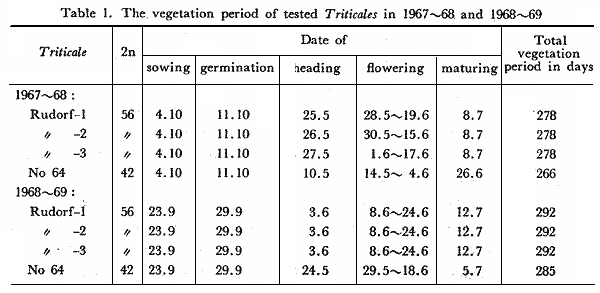
Considering development stages it appears that in 1968 Triticale No. 64 flowered 14-18 days earlier than the octoploid Triticale Rudorf. However, the end of flowering of Triticale No. 64 coincided with the beginning of flowering in Triticale Rudorf and this is the only explanation for the appearance of individuals similar to F1 hybrids from a spontaneous cross in the following year in the population of Triticale Rudorf next year. In hand pollination F1 hybrids from Triticale Rudorf x Triticale No. 64 are easily recognisable due to dominant marker characters such as:
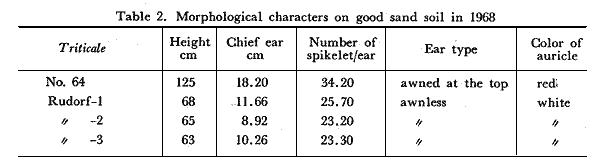
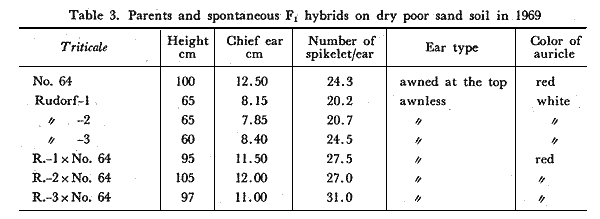
In 1968-69, 100 seeds were sown of the three Triticale Rosner strains each and 76, 78 and 48 plants respectively were grown. From these plants 41 individuals were spontaneou F1 hybrids (20.7%) having the height, red auricle, 11-12 cm ear size and 27-31 spikelet of No.64. The extent of the spontaneous cross was even greater than the seed set in the hand pollination though contrary to the 12-16. percent known so far seed set from octoploid x hexaploid Triticales reached 30.9% in 1968.
The spontaneous cross of both Triticale Rosner and Triticale Rudorf with the taller Triticale No. 64 shows that Triticale-breeders have to pay greater attention to open flowering in Triticales. In this respect Triticales are intermediate between wheat and rye, standing closer to wheat. The trend towards selfpollination in varieties and strains known by us is similar to wheat, because they can set seed as weell as wheat when isolated.