T. FUJII
National Institute of Genetics, Misima, Japan
Differences of sensitivity between di-, tetra- and hexaploid plants were compared in several species and varieties of Triticum and Aegilops. Dry dormant seeds were used for this examination which were irradiated from 20 to 70 kr by gamma-ray. Radiosensitivity was determined by the decrease of germination rate and the average length of the seedlings. Genus Aegilops showed more tolerance to radiation than genus Triticum. In tetraploid species of Aegilops the germination rate remained even at 40 kr, compared with that of the control, while that of the tetraploid Triticum dicoccum showed a marked decrease at 30 kr. A part of the results is shown in the table.
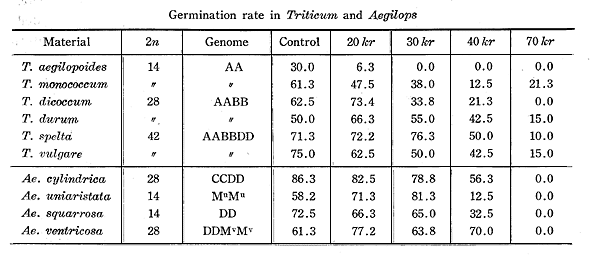
Diploid species of Triticum and Aegilops were most sensitive to radiation, and the hexaploid Triticum species were not more resistant than the tetraploid ones. Differences of sensitivity were also observed in different varieties (or species) of a species (or group). These facts show that radio-sensitivity depends not only on the kind and number of genomes but also on the kind of alleles present.