K. TSUNEWAKI
Faculty of Agriculture. Kyoto University Sakyo-ku, Kyoto 606, Japan
In order to characterize genetically the cytoplasms of all species of Triticum and Aegilops, two investigations have been conducted in 1982 with collaboration of Dr. Y. OGIHARA, Mr. H. TSUJIMOTO and many others. Some details of the results will be reported.
1. Investigation on the effects of the cytoplasms on various characters of 12 common wheats
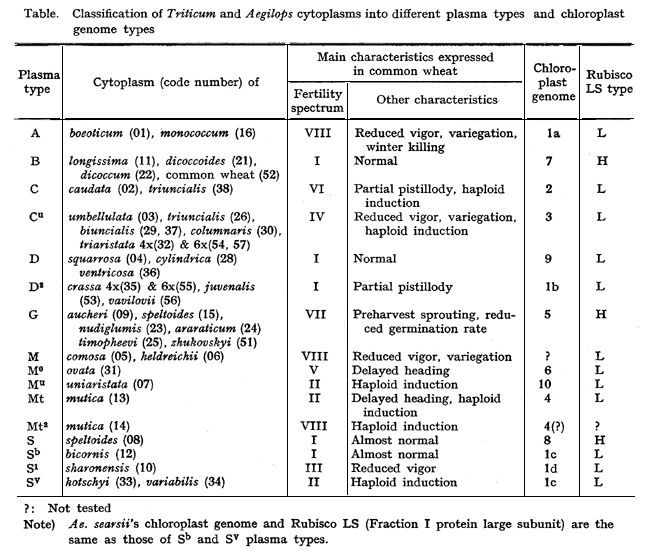
About 500 nucleus cytoplasm (NC) hybrids, in which the nuclei of 12 common wheats are combined with the cytoplasms of 40 strains belonging to 32 species in all possible combinations, were grown together with normal lines of 12 common wheats in field under a split plot design, and their 16 characters were observed. Based on these results and some other supplementary data, the 40 cytoplasms could be classified into 16 plasma types, of which main features are given in the table above.
2. Electrophoretic patterns of restriction enzyme digests of chloroplast DNA
Chloroplasts (ct) were isolated from seedlings of self fertile NC hybrids having different cytoplasms. DNAS isolated from the chloroplasts were digested with four to seven restriction enzymes, and the so-called "restriction pattern" of the digests was analyzed by agarose gel electrophoresis. The results revealed that there are, at least, 13 chloroplast genomes distinctly differing from each other. The chloroplast genome of each cytoplasm is also given in the table.
Based on the results presented in the table and on other data, the phylogenetic relationships among the cytoplasms, and among the species of Triticum and Aegilops have been discussed.